
Rabby Chrome Extension: Why Transaction Simulation Matters for Multi‑Chain DeFi Users
One common misconception among active DeFi users is that a wallet is just a signing tool — click "confirm" and the network handles the rest. That assumption is dangerous. The mechanics of modern decentralized finance mean a signed transaction can do far more than move a token; it can grant perpetual approvals, interact with poorly written smart contracts, or route funds through unexpected paths. Rabby’s Chrome extension reframes the wallet's role: not merely a signer but a simulator and gatekeeper that interprets the on‑chain effects before you commit.
In practical terms for U.S.-based power users, that difference matters when interacting across dozens of EVM networks, high‑value pools, and permissionless contracts. I’ll unpack how Rabby’s transaction simulation works, where it materially improves security and UX, what it cannot (yet) solve, and how to reason about trade‑offs when you choose a multi‑chain wallet.
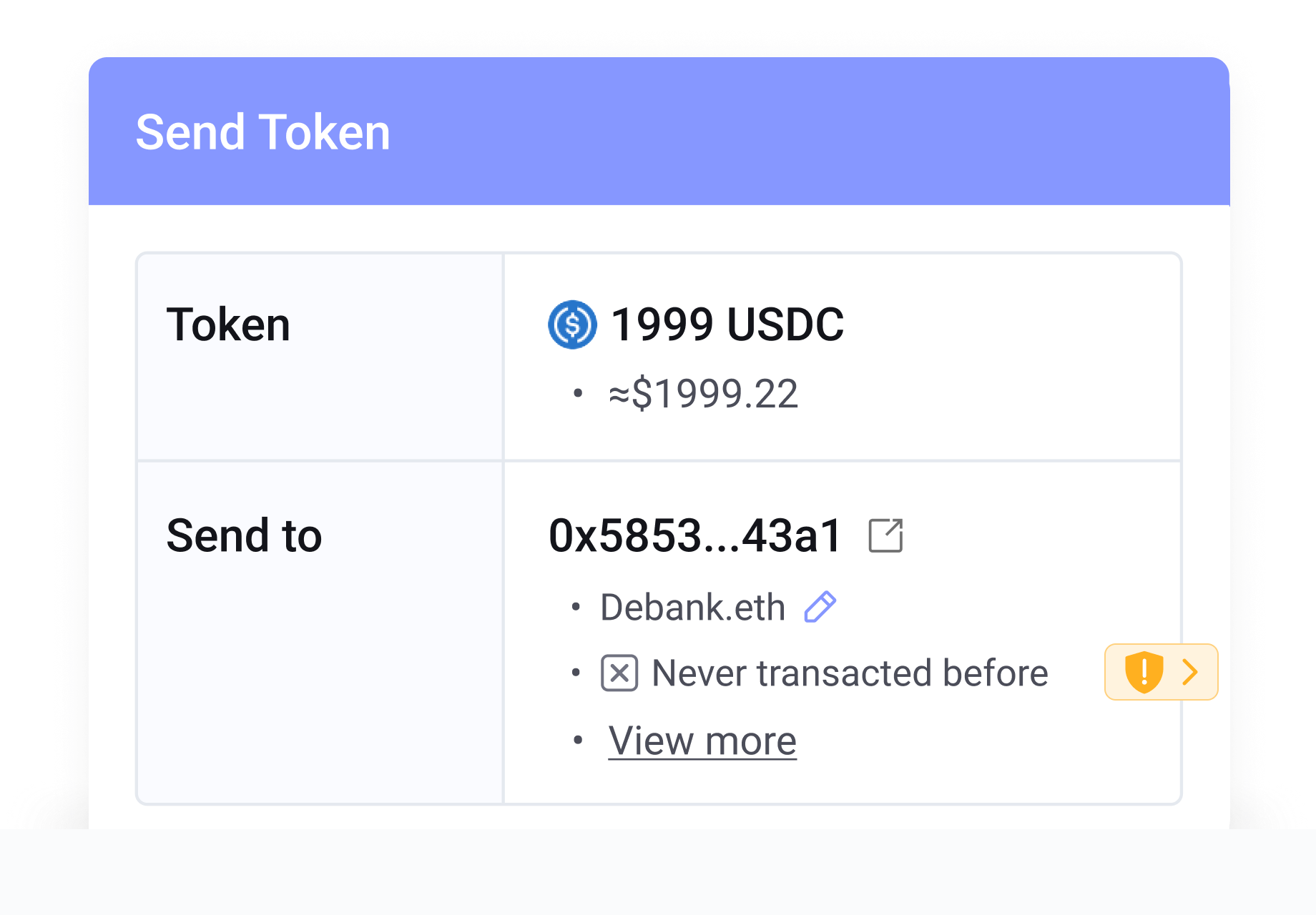
How Rabby’s Transaction Simulation Works — a mechanism view
At its core, Rabby runs a read‑only execution of the transaction payload against a node or simulator before asking you to sign. That simulation returns concrete outputs you care about: estimated post‑transaction token balances, gas fees, and any internal calls the contract would make. By translating raw bytecode activity into an easy‑to‑read delta—"you will lose X tokens, spend Y gas"—it prevents the kind of blind signing where users authorize opaque contract calls without understanding side effects.
Two additional security engines augment the simulation. First, a pre‑transaction risk scanner checks databases of known compromised contracts, suspicious approval patterns, and invalid recipient addresses to produce human‑readable warnings. Second, Rabby displays approval scopes and offers one‑click revocation of active allowances, reducing the attack surface where a compromised dApp might siphon tokens later.
Why this matters in multi‑chain workflows
DeFi power users deal with complexity: cross-chain bridges, layered rollups, and numerous decentralized exchanges. Rabby supports over 90 EVM‑compatible chains and automatically switches networks when a dApp requires a different chain. Simulation prevents surprises that arise from automatic network switching—like accidentally signing an approval on the wrong chain or paying gas in an unexpected asset. The cross‑chain gas top‑up feature also addresses a frequent nuisance: being token‑rich but gas‑poor on a target chain. Together, these features reduce friction and reduce costly mistakes.
Hardware wallet integrations (Ledger, Trezor, Keystone and others) combine the security of a cold key with Rabby’s software‑level checks. Mechanistically, the extension prepares and simulates the transaction; the hardware device signs only after the user inspects the simulated effects. That separation of roles is a useful mental model: simulation = detective work, hardware signing = execution consent.
Where simulation helps — and where it doesn't
Simulation catches many classes of errors: malformed transactions, obvious abusive approvals, and known‑bad contracts. It quantifies gas and token deltas, helping you compare outcomes across swaps and complex DeFi composability. But it has limits. Simulations typically assume deterministic contract behavior and current on‑chain state. They cannot always predict outcomes that depend on asynchronous external calls, mempool race conditions (front‑running or sandwich attacks), or off‑chain oracle manipulation that occurs between simulation and execution. In other words, simulation reduces but does not eliminate risk.
Another boundary condition: Rabby does not have a built‑in fiat on‑ramp, so U.S. users still need on‑ramp services outside the extension. Nor does it natively perform staking inside the wallet; you must use external dApps or integrations for those workflows. These gaps are practical constraints—Rabby focuses engineering effort on transaction safety and multi‑chain orchestration rather than payments rails or custodial conveniences.
Comparative trade‑offs: Rabby versus MetaMask and others
MetaMask established the browser‑wallet baseline: broad adoption, developer familiarity, and extensive dApp support. Rabby differentiates by adding pre‑transaction simulation, automatic network switching, and a native approval revocation tool. Those are not cosmetic features. For active traders and liquidity providers, seeing the exact token delta before signing can change behavior: you decline dangerous approvals, split a swap across routes, or adjust slippage limits informed by simulated outputs.
Trade‑offs appear in ecosystem compatibility and habit. Some dApps are tested primarily against MetaMask, and power users sometimes keep multiple extensions and flip defaults when compatibility issues arise. Rabby’s "Flip" toggle makes switching between Rabby and MetaMask straightforward, but managing multiple wallets remains a cognitive load. Institutional users can mitigate this by pairing Rabby with multi‑sig solutions (Gnosis Safe, Fireblocks) for custody and operational controls.
Security history and realistic trust
Rabby's open‑source MIT license invites audits; transparency is a real plus. It also has a documented incident in 2022 where a Rabby Swap contract was exploited for roughly $190k. The response—freezing the contract, compensating users, and improving audits—illustrates an important point about trust in software projects: history matters but so does response. Good operational security is not the absence of past incidents but having processes to detect, contain, and remediate them.
For U.S. DeFi users who weigh institutional risk differently from retail users, that history should be part of a decision matrix, not a disqualifier. Combine code audits, open‑source visibility, hardware wallet checks, and a clear incident response record when assessing whether to use any wallet for large on‑chain exposures.
Decision‑useful heuristics: when to rely on simulation and when to add layers
Here are practical rules you can apply immediately:
1) Use simulation as your first filter: if the pre‑transaction simulation flags an unusual token delta or a non‑standard approval, pause and investigate. The simulation saves you time only if you treat warnings as actionable, not cosmetic.
2) For large or repeated approvals, favor minimal allowance patterns (approve exact amounts, or use permit-style flows where available) and revoke allowances periodically with Rabby’s revocation tool.
3) Pair Rabby with a hardware wallet for signing high‑value operations; treat Rabby’s simulation as the interpretive layer and the hardware device as final consent.
4) For institutional flows, combine Rabby’s client with multi‑sig custody to enforce operational separation: simulation + multi‑sig approval reduces single‑actor risk.
What to watch next
Given Rabby’s engineering focus, watch for two signals that would materially change its value proposition: (A) addition of native fiat on‑ramp or staking features, which would broaden onramp convenience but also expand the attack surface; and (B) deeper integrations with mempool‑aware front‑running defenses (e.g., private relays or transaction ordering services). If Rabby integrates mempool protections, the gap between simulation and real execution outcomes could narrow. Absent those, users should assume simulations are state‑accurate but not front‑run proof.
For readers who want to explore Rabby directly, see the project overview here: https://sites.google.com/cryptowalletextensionus.com/rabby-wallet/
FAQ
Does Rabby prevent all kinds of scams and exploits?
No. Rabby’s simulation and risk scanning reduce many common vectors—blind signing, dangerous approvals, known-bad contracts—but cannot prevent exploits that rely on off‑chain oracle manipulation, zero‑day smart contract bugs not yet cataloged, or mempool front‑running that occurs between simulation and broadcast. Treat simulation as a strong filter, not a guarantee.
Can I use Rabby with a hardware wallet for maximum safety?
Yes. Rabby supports major hardware wallets such as Ledger, Trezor, Keystone, and others. The recommended pattern is: run the transaction simulation in Rabby, inspect the results, then use the hardware wallet to sign. That separation reduces risk by keeping private keys offline while giving you the interpretive benefit of the simulator.
How does Rabby’s automatic network switching affect security?
Automatic network switching improves UX by putting you on the correct chain for a dApp, reducing accidental confirmations on the wrong network. However, automatic switching raises the need for vigilance: always confirm the network and the token symbol displayed in the simulation. Simulation helps by showing expected token deltas on the active chain before signing.
Is Rabby suitable for institutional or multi‑sig operations?
Rabby integrates with institutional tools like Gnosis Safe and Fireblocks. For institutional security, combine Rabby’s client checks with on‑chain multi‑sig workflows to enforce multiple approvers and custodial controls. That hybrid approach preserves Rabby’s simulation benefits while meeting higher governance standards.